Stalled Summer

Sometime in mid-July I was gifted a little variegated Hosta that was starting to struggle in its home environment, so I planned to make it part of my peace garden project, to find a spot where it could flourish.

I took it out of the truck, set it in the wood chips on the east side of the front porch, and it sits there as I type.
Because we’ve had a. lot. of rain, and because it’s conveniently located next to the hose, which is conveniently located to anyone going in or out of the garage, to or from the barn, and up or down the driveway, the plant gets watered frequently and enjoys a healthy dose of morning sun daily.

But it must be strongly rooted in some soil of serious sustenance, because even in this minimal maintenance mode, after all these months, it is still hale and hearty, bright and unblemished by deer, dogs, slugs, grubs or other bugs.

The opportunity to prove its survival skills has been provided to the hearty Hosta by the amalgamation of rainy days, procrastination, hot days, sloth, and low positioning on the priority list.

Its chosen spot in the front yard garden is currently occupied by a sedum plant that is slated to be moved to a sunnier side of the yard, which is presently populated with a couple of columbines.

The perennial repositioning may finally reach the top of the roster this week, given that our summer has stretched though September and beyond, with a couple 90-degree days possible before the weekend.

I appreciate the extended sandal season, but flip flops, capris and short-sleeved tees are not usually part of my back-to-school wardrobe, and the unseasonable warmth is wearing out its welcome.

The Land of Oz apple trees that line the yellow brick road that is my boardwalk to the barn pelt me with random plunks of their overripe fruit, the flesh now bored by beetles and bees. I take no pride in the sinister satisfaction derived by dousing them with insect spray, but I do it anyway.

The lilies, phlox and astilbe surrounding the barn are dead and dry, ready for their seasonal shearing, a chore usually completed in a 40-degree drizzle. But this year the soaking will be from the sweat on my back in the 80-degree sun.

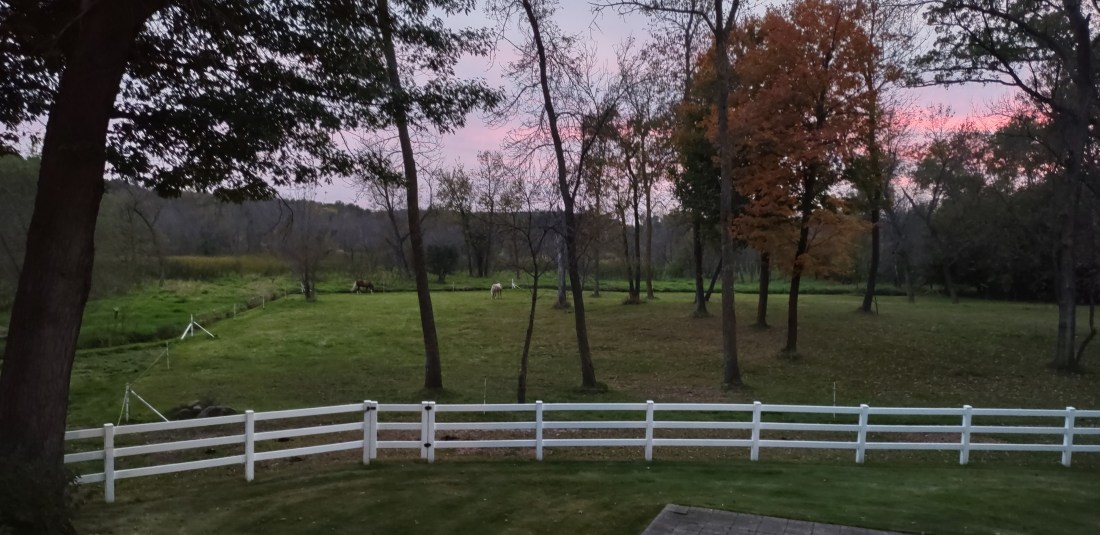
Dead brown leaves fall onto live green grass in the pasture, allowing the three hundred bales of inventory in the loft and hay stalls to remain stable as the horses enjoy fine dining on fresh grass.

Flies still follow Chicago and Moe into the barn, but the absence of an autumnal chill has aborted the usual heat-seeking mission that keeps them hanging on the horses, in favor of a hover, touch and go and buzz the human operation.

The days are hot, but the sun now sets before seven, giving way to clear skies and cool nights. Backyard bonfires, sweatshirts and s’mores can’t be far away, with burning logs in the living room fireplace, insulated overalls and decorated sugar cookies right on their heels. Let’s think about that tomorrow.

Today, I’ll consider the Little Hosta That Can, digging deep roots in a permanent place in the Peace Garden by Friday.

Or Saturday.

For sure by Monday.

Hearty Hosta

Remembering What was Buried

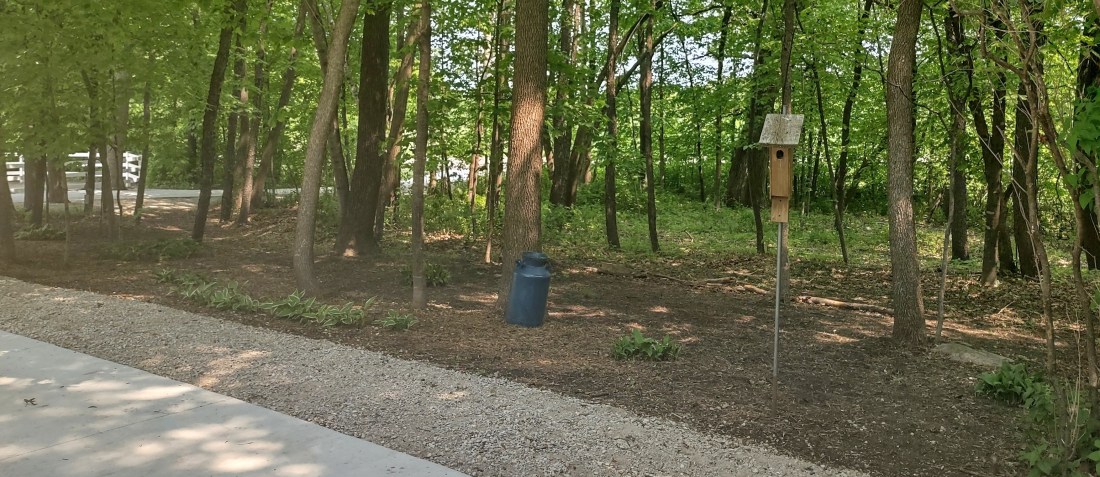
In the spirit of the graduation season, a couple weeks ago I commenced to learn how my little Peace Garden Plot survived the cold and snow, to find what lies hidden under the heavy wet leaves.

So, I pulled on some gloves and pulled off the dead of winter. George can’t refrain from the occasional unsupportive-spouse comment on my efforts to “rake the woods” but it’s only a small section, and the leaves are mostly dry, and the energetic output allows for some extra caloric input in the evening, so I carry on.

Rowdy and Ruffian keep me company, eager to embark on their own expeditions for buried treasure. Rowdy unearths squeaker balls he’s known and loved and lost in the woods, content to celebrate his finds with a proud display wherever I go.

Ruff, however, excavates simply for sport, digging dirt in all the wrong places. He also loves to chew twigs, sticks and fallen branches, dragging them through the forest, across the driveway and into the front yard, leaving a trail of leaflets, bits of tree bark and muddy pawprints wherever he goes, including in the house.

They’re entertaining companions, who make tedious tasks tolerable. If they wander out of sight or earshot, they return promptly when I call, or better, use the official blaze orange hunting dog whistle I wear high-school-coach-style around my neck. A solid tweet brings them running for the payoff of whatever tasty treat I’ve remembered to put in my pocket.

My little plant project began as a brainstorm to beautify the view from the front porch, a little section of the Forest of Four Sticks Farm on the other side of the driveway, the goal being a scenic spot to inspire calm. Then it expanded to an experiment in repurposing, replanting, and rethinking as I transplanted perennials from around the property.

My thumb is far from green, so this is a bit of a trial-and-error research project for which only vegetation with demonstrated Four Sticks survival skills have been recruited.

I failed to map my plotted plants – rookie mistake, product of a deluded mind convinced it would remember what is where – so I spent a couple hours stripping the flower bed of its winter comforter, with a couple prayers to the patron saint of greenhorn gardeners, hoping to unearth something other than wet earth.

Under the saturated maple sheddings I spied shoots. Eureka!

Hostas, lilies-of-the-valley, a tiny clump of dianthus pinks and a rogue day lily, tossed in the woods to make room for the new driveway all survived. My botanical Rip Van Winkels, sleeping under a layer of decaying leaves that could have smothered them, but instead, sheltered them, are now small green spikes, promising to rise and shine for another summer.

Some of the hostas – cherished memorials to cherished horses – were slow to appear, but only because they were buried a little deeper and needed a little more mulch moved, a little more water decanted to encourage them to wake up and soak up the sunshine.

I’m not sure what my little peace place will look like this year, what it will grow into; but as I survey the landscape, pleased with the present, planning the potential, there is hope in seeing the sprouts, and joy in dreaming of what will bloom. Ferns, columbine and more hostas will find new spots this year, with wind chimes, and just enough garden art to add just enough whimsical charm.

But no dogs will be used for the digging.

Excavation equipment