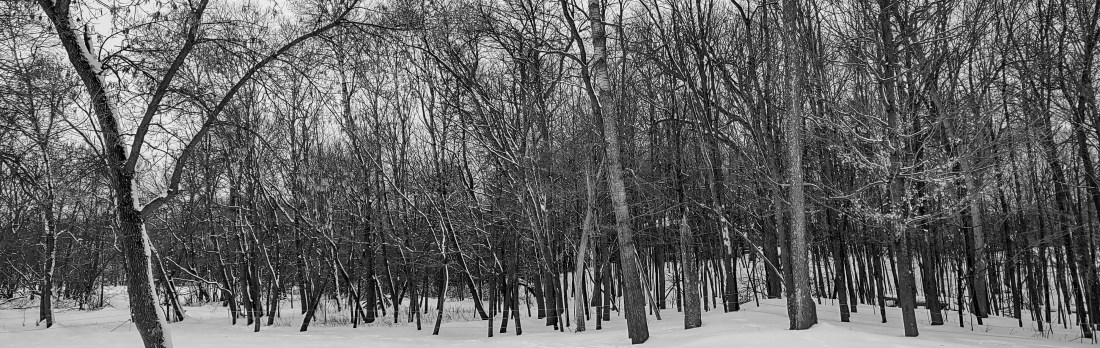
Winter has worn out its welcome. In proverbial Minnesota Goodbye fashion, the cold and the snow and the wind and the ice loiter in the front entry, hand on the doorknob with the promise of heading out, engaged in endless discourse – “one last thing, then I have to get going”. The ultimate unwanted house guest.
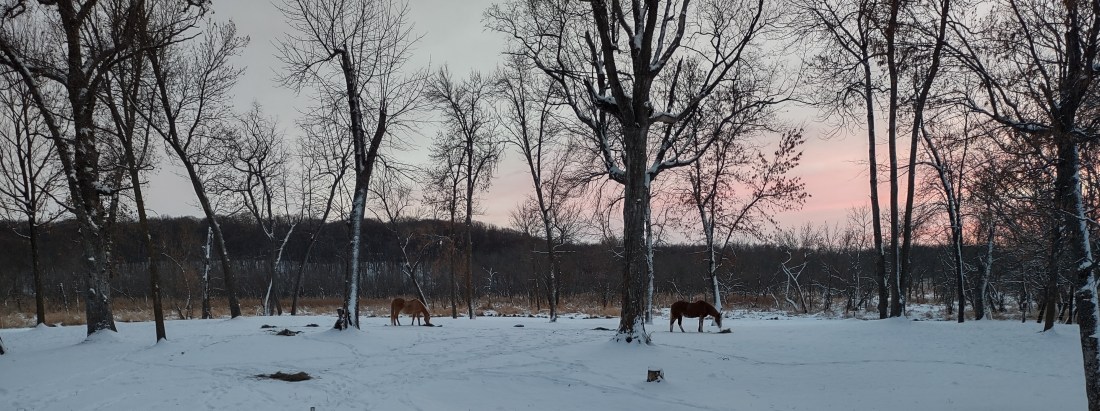
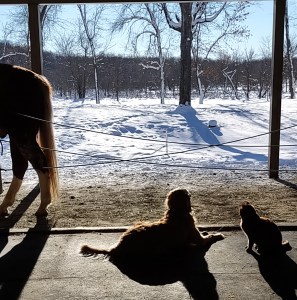
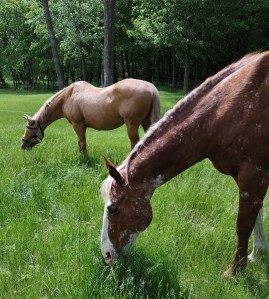
By this time in March, I generally have the pasture closed off with the electric fencer on, to allow the grass to get a head start, unfettered by eager equines starved for the sweetness of fresh forage. But compliments of a steady series of cold fronts and clipper systems, Biskit and Chicago still have 24-hour access to the blanket of snow that is our grazing field.
I watch them navigate the course of our infinitesimal climate change with admiration. For all but 3 or 4 hours of snack-and-snooze stall time, they live outside. Their barn opens to an ample covered space with a rubber-matted floor, a heated water fountain, and easy access to the pasture and dry lot.
Early-morning and late-night hay go under shelter, but unless it’s pouring rain, I scatter midday rations in the pasture to encourage exercise. They then have the option to nibble on the omnipresent bits and pieces littering the shelter floor or meandering out to the greener patches on the snow-covered field, and I marvel at how often they choose to navigate the hock-high snow with their natural snowshoes.
Inspiring really, how they go out or stay in, wait for their blankets, or walk away when they see them coming, picking pelting precipitation over stifling surcingles. Even when hunger isn’t driving them, they’ll venture out in the elements, sometimes simply standing, natural sponges to the natural showers. They stroll back to the barn when I slide open the door, coats curled and manes marcelled, no sign of discomfort or discontent.
Biskit and Chicago are cognitive creatures, with environmental awareness and excellent memories, able to choose to stand up front at the gate or out back by the fence, socialize or stay away, soak up the sun, snooze in the shade, or drench themselves in downpours. Good with their choices, ok with their consequences, they hold no grudges, demand do-overs, throw no tantrums. Well, except for Biskit, who’s been known to bang on the barn door when he deems it dinner time and I decide otherwise.
They are content. And I now opt to follow their lead in acceptance of this never-ending winter of my growing discontent. I will find solace in the stronger sunshine that finally illuminates our days past dinner. I will embrace the cold that allows me to toss hay bales sans sweat, and I will find joy in Mudville as the ground around the barn morphs from packed snow into slimy muck.
Winter will wander on; white will give way to green; and I will wait.
Patiently.
Except for maybe just one tiny kick of the barn door.
Trailer loading is one of the processes Chicago and I practiced profusely when we were very young, and one of the couple behaviors on which we came to mutually agreed-upon terms, trusting each other to be calm and cooperative, to stay sane to stay safe.
Chicago mastered the art of walking in and backing out of a straight-load 2-horse trailer, and he did it without incident for the 10 years we travelled to barns for lessons and parks for trail rides, nominally nullifying the irritation caused by our many storied incidents in those barns for those lessons and in those parks for those trail rides. He objected to left canter leads and park rangers on four-wheelers, but never to loading in a trailer.
But then our trailer sat idle for a few years, mobilized only for the annual shoe-horning into the barn shop for winter storage and the subsequent tow back out to the parking area in the spring.
Eventually I realized that we’d reached a point at which the only time the horses will likely leave the property will not necessitate them walking into a trailer, so I sold it, with the conviction that in the unlikely event of a trailering emergency, I’d be able to phone a friend.
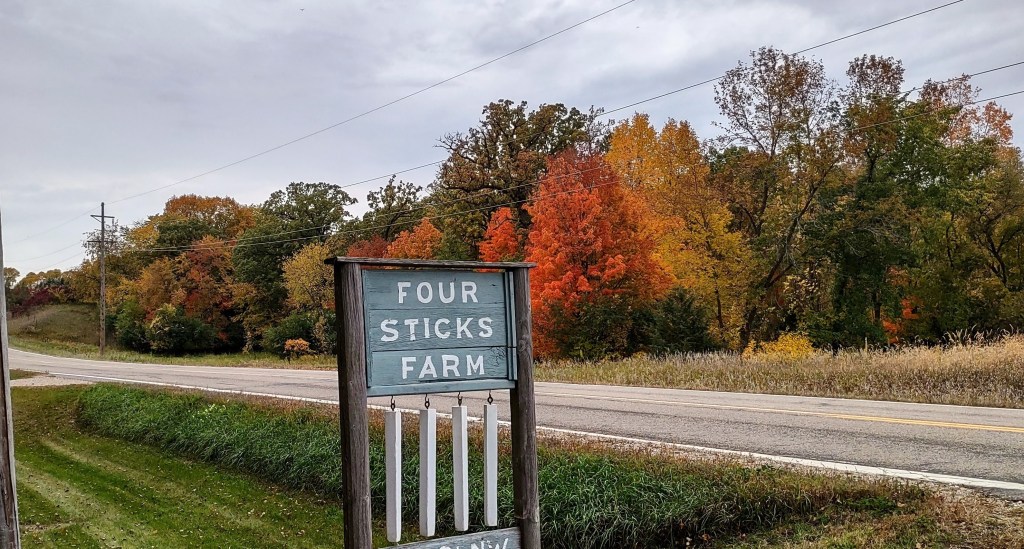
And for two years we had nowhere to go, nothing to do that couldn’t be done within the four corners of Four Sticks Farm. But about a year ago my big red beast needed to have a tooth extracted at the University of Minnesota, which is an hour drive from us. He needed to go to the U because he needed to have a scan of his skull that could only be done with their equipment in their clinic.
There are people who transport horses for a living, but calls to them proved discouraging, as they were either out of the business, not interested in local trips, or willing to do it for an exorbitant price with scheduling issues that may have meant an extended campus visit, i.e., they could get him to the clinic on time, but no promises on the return trip. While I’m sure Chicago would’ve loved to hang out with the lovely and talented vet students and staff in the cozy confines of the teaching barn, leaving him longer would’ve pushed the limit of his spring break budget.
I have a few kind and generous friends with trailers, but borrowing someone else’s equipment brings risk of damage or desecration, and I didn’t want to add stress to an already stressful experience by going into it with the possibility of ruining a practically perfect relationship.
In the end, I called my neighbors, fellow backyard horse keepers I met and bonded with several years ago at a fundraiser for our little local library. They live a short mile up the road and belonged to our county mounted patrol, so I thought they’d have a lead on a Good Samaritan up to the task.
Turns out, they did know someone. Them. Despite my profuse assurances that I was only asking for contacts, not favors, they were willing and able and insistent that they could, and would, haul us to St Paul Wednesday and back home Thursday. Just because.
They arrived in plenty of time for none of us to feel rushed about loading up and hitting the pavement trail. Chicago brought his A-game, walked right in the unfamiliar ride with neither hesitation nor backward glance, and he stood quietly as we traveled down the interstate and across the campus roads.
My neighbors toured the vet clinic with me, and waited for the surgeon to explain how the process would proceed, which took their entire Wednesday morning and a good chunk of their Wednesday afternoon. They unhooked and entrusted their trailer to the overnight campus parking lot security, and we returned late Thursday morning to hitch up, load up and head up I94.
We’re all equine enthusiasts, and we all enjoyed the opportunity to talk horses for uninterrupted hours. But as happens on road trips, even short rides to “The Cities”, conversation covered a wide swath. We chatted about books and movies, told stories about ourselves and our families, shared our worries about the world, spiced up with just a pinch of local gossip. We listened, learned, laughed, and remembered how much we like our neighbors.
Since Chicago’s never ridden in a trailer he didn’t poop in, when we got home, I walked him to the pasture and headed back to the driveway prepared to pick up his mess. But I returned to a closed trailer gate, an open truck door, and my neighbor waving me and my muck rake away with the assertion that manure management was “part of the deal”.
The best people sometimes volunteer for the shittiest jobs.
I treated for lunch on Wednesday and snuck a little cash in the thank-you card I gave them on Thursday, which they tried to return, but this time I was the insistent one.
We haven’t seen much of each other this year, beyond drive-by waves, social media exchanges, and Christmas card updates.
Nearly two years ago I wrote a post musing about how middle age moved mean Mace to a more moderate space. Who knew he’d hang in long enough for an encore entry about a now (mostly) mellow old cat. The burly brown tabby turns 16 this summer, mind-boggling to me, but breath-holding to our friends at the Monticello Pet Hospital, where his chart is flagged to encourage efficiency. Get done and get out, save the social niceties for when the golden comes in.
Get off my bale
But Mace’s gravelly growls never passed the Peaceful Protest Level of Objection at our 2022 annual exam, thanks to the introduction of a new modern marvel – the squeeze tube of tuna paste. A dab or two did nicely to distract my bad-tempered barn cat long enough to do what needed to be done.
Probably has a fever
What needed to be done included taking his temperature, a procedure so fraught with tension that a very veteran veterinarian once aborted his attempt to insert the thermometer under the fierce feline’s tail, opting instead to work under “the assumption that he has a fever”. That, my friends, is wisdom. In the interest of self-preservation, go with the educated guess.
The young readers who came to our Books in the Barn program called him “Crabby Cat”, a richly deserved moniker which was clarified to every rookie visitor, and confirmed by those foolish enough to believe they were blessed with cat-whispering capabilities beyond the rest of us.
Soap and clean towels by the barn sink. Here’s the Neosporin and the Band-Aids.
Back when he was very young
Maybe his leonine leanings contributed to his longevity. Mace came to the farm, a two-pound ten-ounce sweet-faced slip of a kitten, full of ear mites and a motor that never stopped purring. But a couple scraps with things that go bite in the night, a couple abscessed wounds, a couple unpleasant vet visits with a couple assumptions of the presence of fever are bound to leave a mark. He toughened up, and for a few years, put up fences for his own protection.
But he still showed up, did his job, and stayed just social enough to keep his spot on the roster while he worked through his temperament troubles.
Eventually, the growling and biting gave way to simply walking away, as time and experience presented a clearer picture of serviceable options. I guess that’s what age does for us. We learn who loves us enough to tolerate the occasional crabby moment, figure out what we contribute to the common good, discover where we feel safe and happy, decide when to pass on the major mousing to the young kits, and we understand why sitting on a cushioned chair in a cozy spot is simply the cat’s meow.
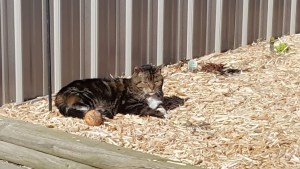
His belly’s a little big, his walk a little wobbly, and his actions a little less animated, but old Mace is still here, snaring the random rodent, missing zero meals, and sitting in front of the electric eye so the barn door doesn’t close until he’s caught a couple rays.
He accepts the occasional wrestling challenge from Fennel, appreciates the occasional cuddle from the two-leggeds, and assures the clinic staff of the continuing need to stock tuna-in-a-tube.
New year, new resolve to be a new me. Two and a half days with nearly 12 inches of snow gives a girl a ton of time to watch and wonder, and where better to find inspiration for improvement than the barn – my herd, my pride, my pack.
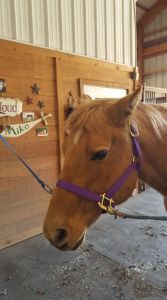
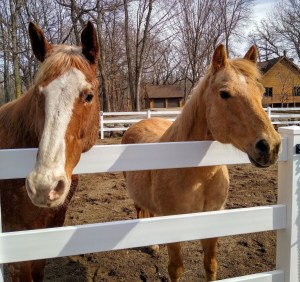
Biskit – eternal optimist and concise communicator, stares into the house to ensure I realize he’s done with his afternoon hay and expects I’ll be down shortly with the night ration. My pretty palomino snakes his pot-bellied self in through the guard ropes to demand his turn for grooming, then paws, poops, and pees in the barn aisle when he’s had enough.
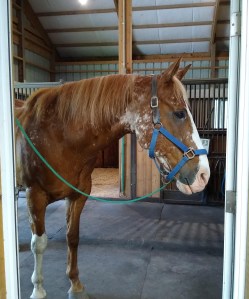
Chicago – handsome but humble head of the herd, a low-key leader whose management style leans toward ear flicks, nose nudges, and strategic posterior positions. Calm and cooperative, unless we’re talking blackbirds taking flight from the forest floor or metal garbage cans taking space on the path of travel – he engages agreeably but also appreciates his alone time.
Fennel – facing his fears, rarely anymore does he beat a hasty retreat at the sound of the barn door opener, the voice of the hand that feeds him, or the panting of the rowdy golden retriever, opting instead to stay snuggled in one of his many his security spaces, or to stroll over for a casual scratch behind the ears. Seems he’s finally embraced the idea that while it’s neither Kansas nor Oz, there’s no place like Four Sticks Farm.
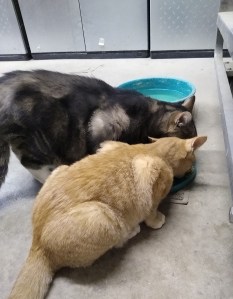
Mace – aging gracefully, surrendering the things of his youth. Content to pass the pest control baton to the teenage tabby, and to sometimes pass on the pieces of food on his plate, he now eats because he’s hungry, not because there is kibble in the cat dish, thus preventing the Big Squeeze that used to be his pet door problem.
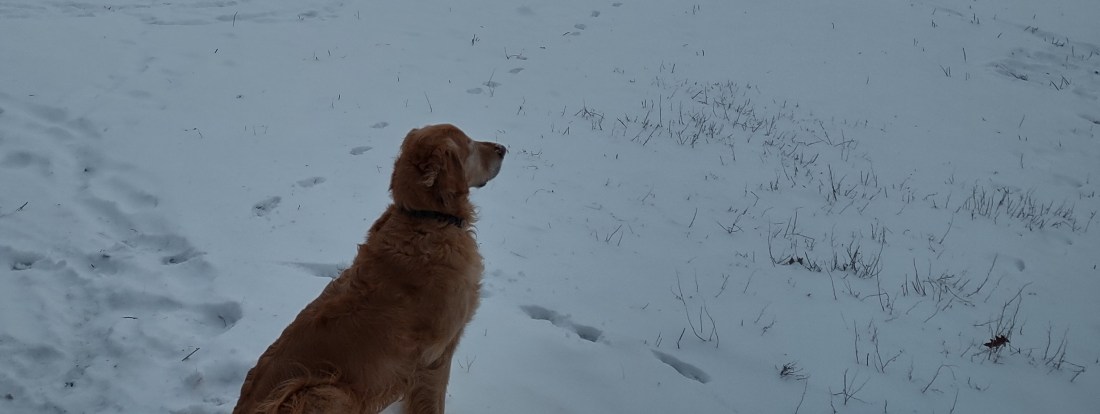
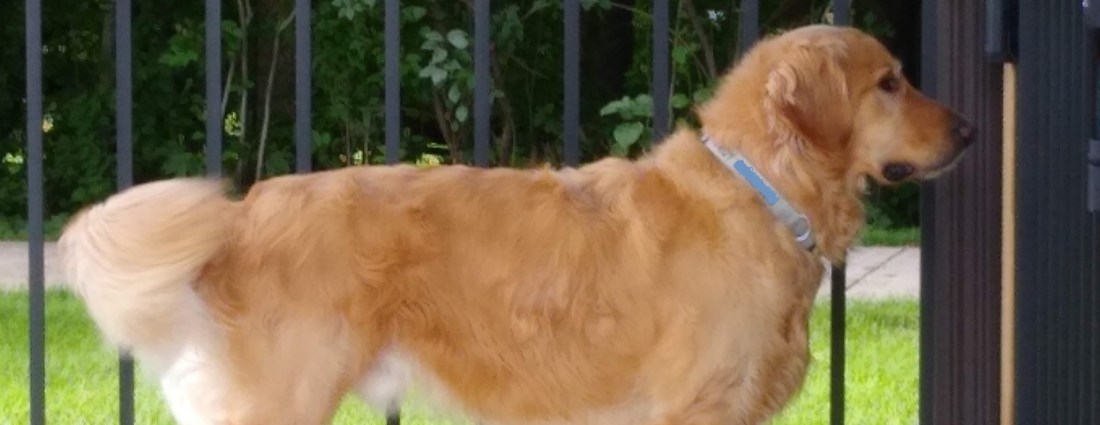
Rowdy – glee in a golden fleece, always good to go – upstairs, downstairs, for a walk, for a ride, to the park, to the kitchen for a peanut butter bone, he’s happy to be there. And unless he’s lying in the living room with his family and his fleecy friends, Rowdy finds no greater pleasure than chasing squirrels into the trees and deer out of the pasture, ears flapping, lips fixed in his goofy golden grin.
There can be no better model than my animals to lead my quest for a better me. Think positive. Be clear and be kind. Speak your piece and make your peace. Sometimes be social, sometimes be solo. Try, even the scary stuff. Don’t eat if you’re not hungry. Get outside. Move. Play. Ponder. Everyday. Live simply.
The quality or state of being of sound moral principle; uprightness, honesty, and sincerity
Living with livestock leads to some level of obligation – daily bringing-ins and letting-outs, checking-ons and brushing-offs, wiping-downs and cleaning-ups – which also offers ample opportunity for observation and reflection.
We’re experiencing an unusually cold December – temperatures below zero, and as I write I see the trees swaying to balance their heavy white hats in 20 mile per hour winds.
I also see a packed white path to the semi-protected sun-catching site in the southwest corner of the pasture, and a variety of brave birds flitting between the snow-covered cedar tree and the suet feeders – reminders of the marvel of instinct that allows animals to adjust, adapt and abide such harsh conditions.
Biskit and Chicago spend about 20 hours of their days outside, coming in around noon for 3-4 hours of quiet time. Given the willingness with which they walk in, I believe they enjoy the chance to eat, drink, and lie down in a shavings-bedded stall, but given the alertness with which they greet me when I return a few hours later – including Biskit’s semi-annoying banging of the metal door – I also believe they are eager to return to the natural elements.
Our barn opens to a covered shelter space, with hay feeders, an automatic waterer that allows 24-hour access to 52-degree refreshment, and cover from rain, sleet, snow, and sun, if they want it.
But they don’t always want it. They wander out to the pasture – wide open for the winter – and find a sunny spot to stand and doze. They snuffle and scrounge around in the snow, pawing up pieces of frozen pasture, and warm their muscles with an occasional session of horseplay – sparring back and forth, a couple of senior geldings playing stallions.
To stoke the furnaces that are their bellies digesting hay, on the super-cold nights I tend to put out a little more than they need, just to make sure the thermostats stay turned to “toasty” and am pleasantly surprised to slide open the big door in the morning to see small piles of untouched hay that they didn’t need – warmth and willpower, admirable indeed!
Though I have a blanket for each of them, neither is interested, beating a hasty retreat when they see me walking out of the tack room with those armfuls of insulated bulk with buckles. Apparently, like their owner, they have a sufficient layer of natural protective padding.
Chicago greets me with the same good-natured nicker every morning, positioned to belly up to the wheelbarrow and browse through the sunrise ration, while Biskit paws at his feeder for the 17 seconds it takes me to climb through the ropes with a couple flakes for him.
Then they carry on calmly, trying each pile of hay before settling on the one that suits Chicago’s fancy, with Biskit taking the next best.
The farm felines live a life of a little more luxury, spending the better part of their days within the confines of the heated barn shop, snuggling in a fleecy bed, or catching a few winks on the cushions of the porch chairs, stowed for the season.
Fennel fuzzes up and heads outside for a few fleeting moments every day, but Mace, the seasoned veteran of 15 winters, takes advantage of the two 10 by 12 shavings-filled litterboxes in the barn, easily accessed through the 6 by 8 flap-filled cat door in the shop, and isn’t likely to brave the elements until the red line on the thermometer reaches 32.
The four-leggeds adapt to what the world presents and live their lives with admirable acceptance – no whining, no resentment, no scheming to change conditions to their own convenience. They seek shelter during the extreme conditions, but still move out, stretch out, and search out the sunny spots for at least a little while, every day.
They spend their time in the snow, the slush, or the sun, sometimes under cover, sometimes not, but always without complaint. They accept the world as it is, patient, trusting. They endure the harsh weather, tolerating the elements and each other with grace, finding a spot to snack, snooze or simply wait it out.
Ours is a small house. Comfortable for us, but more than two guests for dinner leaves limited elbow room around the table, with detours around the dog bed that doubles as the hearth rug.
Because the main bath is also the master bath, visitors are privy to my preferences in hair and skin care products, and to the old orange beach towel hanging on the door handle to swap the slobber from Rowdy’s chin after each of his 157 daily drinks.
Horses in the back yard means hay in the back entry. Hay, shavings, horsehair, and cat fur make their ways inside, to mingle in the drool drip and pawprint parade that meanders around the wood floor of the main level.
Despite the effort to minimize clutter and maximize clean, guests rarely leave without a small dollop of Four Sticks DNA. Compliments of the house. You’re welcome.
Sometimes I think about the luxuries of living in a house without animals. Freedom from dirt, dander, puddles, feeding schedules, farrier schedules, inside time, outside time, stall cleaning and Swiffer swiping. A closet full of fleece, with no need for a lint roller.
Then I see two tabby cats greeting me in the driveway at sunrise, positioned to steer me down the walkway toward the barn, through the tack room, and to the cat chow, lest I lose my way or forget the Order of Go for morning chores.
I see a white-faced golden gazing at me when I come out of the bedroom closet after work, waiting to see what I’m wearing, which will determine the afternoon’s activity. Sliver of saliva stretching from his jowls, he’s ready to roll with whatever I want to do. Barn? Beautiful! Errands? Excellent! Park? Perfect! TV? Terrific!
I see a couple of hefty horses watching me through the living room window at sunset, wondering if I remember they’re waiting for their overnight ration.
What I don’t see is leaving this place anytime soon. I see staying in our little house for many years to come, cramped, cozy and comfortable, filled with family and friends who don’t mind a little crowding.
Just don’t use the beach towel on the back of the bathroom door.
Those lucky to enjoy the companionship of a furry, feathered, finned, scaled, or shelled friend are, indeed, lucky enough.
The Golden Guys
November highlights the opportunity to reflect on the gifts we’ve been given, and for me, that includes the four-legged livestock with whom I share my life.
My animals get me out of my head, out of my house and into the rest of the world.
Rowdy keeps me moving, with his passion for the park, watching to see what I wear out of the closet, exploding with excitement when he sees what he interprets to be exercise apparel.
The Old Guard
Fennel and Mace keep me still, with their appreciation of a warm lap on which to receive a quiet cuddle.
Biskit and Chicago keep me mindful of the natural world, blessing my backyard with the natural beauty of equines.
The Big Boys
They all keep me learning, with health or behavioral issues that lead me through coaching clinics, training classes, educational seminars, veterinary consultations, Google searches, and pet care catalogs.
They soothe in the storm of stressful seas and motivate when I crave the couch.
They speak in barks, hisses, nickers, purrs, whines, whinnies, stares across the room and stares across the yard. Incredibly intense stares.
They are extraordinary listeners, exemplary secret-keepers, and conversation starters who provide smooth ice-breaker introductions and spontaneous chit-chat with people in the park.
They make me laugh and cry and think and play.
They bring me comfort, joy, a sense of responsibility, and a reason to get up in the morning – even when I want to sleep in.
They gallop, saunter, strut, trot, run and wiggle into my heart, and transform my house into a home. A dust-bunnied, paw-printed, barn-boots-in-the-back-entry home.
Fennel’s scared and he’s making us late. I’m not sure just how long they will wait. His appointment’s been set. It’s his time for the vet. But I can’t get him into his crate.
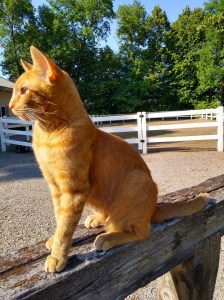
The lives of my barn cats are something of a secret. We often connect at one, some, or all my standard chore times, and while Mace seems to stay in the space between the house and the barn and shows up according to schedule, Fennel lives his own life, a little lion on the loose, a panther on the prowl, a tiger on a tear. Or maybe not.
Braveheart
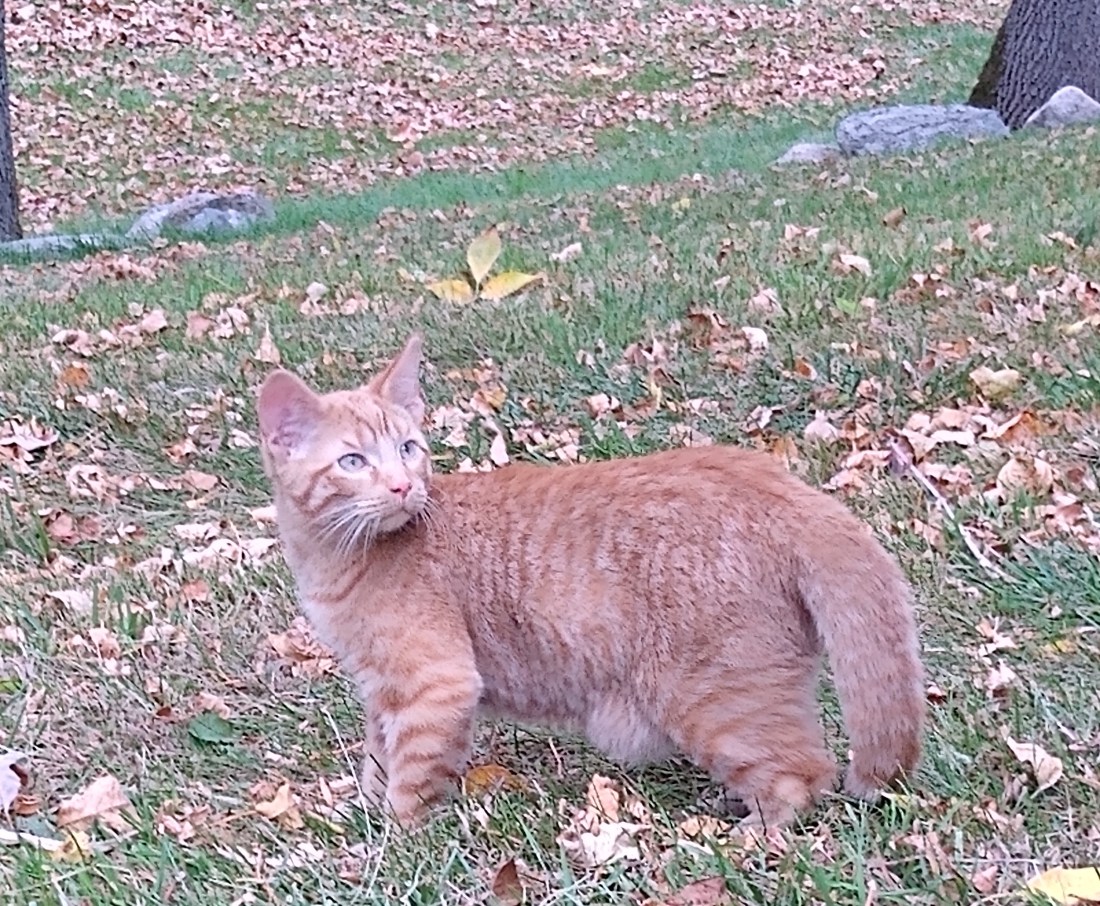
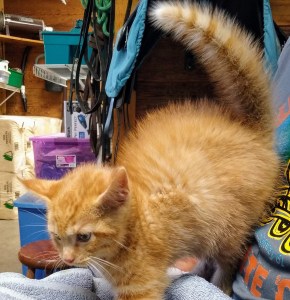
Turns out my once-courageous kitten grew up to be a cowardly cat. Fennel came to Four Sticks, a 10-week-old bit of orange tabby toughness, ready to take on the Goliath in golden retriever clothing. He honed his hunting skills on baling twine, barn flies and grasshoppers, then leveled up to field mice, woodpile chipmunks and the occasional slow-witted songbird.
His confidence built his social skills – he sought us out, sat in our laps, showed us affection.
But that youthful cat swagger led him out to the acres of adventure and adversity around us. He disappeared for one 24-hour period, then eventually a second. One of his mystery missions took the tip of his tail, the other left an abscess on his foot.
I’ve learned to (mostly) let go of the worry when Fennel doesn’t show up for a day but have been saddened by the fear he’s developed since he started exploring the external environment.
Hunting from the Hitching Post
Two months ago, I went to collect my little orange cat for his annual vet visit. He was conveniently located in the barn, so I made a few pleasantries, scooped him up, carried him into the tack room and tried to put him into his little cat crate.
He Houdini’d himself out of my arms, dodged the crate, raced out of the tack room, and scrambled up the hayloft ladder.
So, crate in awkward tow, I climbed up to the hayloft. Though Mace happily roused himself from a cozy divot in a hay bale to greet me, Fennel refused to acknowledge my existence. I shuffled hay bales, cleared a path and by the light of my silvery cell phone, crawled across the scratchy silage to entice him. I murmured a few less than pleasant pleasantries disguised in a reassuring tone to lure him out of his lair, which worked until he spied the crate, which inspired yet another incredibly athletic leap out of my arms, down the ladder and into the tack room.
I wiped the blood from my bicep, hauled the crate down the ladder back to the tack room, this time remembering to close the door behind me. That is to say, the door into the barn. Before I could get to the door into the shop, Fennel had it figured as his escape route and was in the shop and out the cat door.
Hiding from the Vet
Three strikes. I called the game and called the vet to cancel the appointment. Next opening, 6 weeks out.
I have no idea what injury or incident elicited the break in our bond, but implementation of Operation Befriend the Feline is showing signs of building it back. Fearful Fennel is still skittish and beats a hasty retreat in response to unanticipated movements, unexpected sounds, and unknown individuals, but his recovery time is getting shorter.
He meets me on the sidewalk most mornings and escorts me directly to the cat chow container. He generally greets me from the top of the hayloft when I’m in the barn and often ventures down for a little cuddle and conversation.
We suffered a brief setback last week, when the strategic use of kibble in the cat dish, closed doors in the tack room and tail-first loading in the crate resulted in successful arrival for, and survival of, the make-up veterinary appointment. Fennel demonstrated his disdain for me and my deceit for about 36 hours, after which he accepted my good faith offering of Iams Healthy Feline, so we’re back on the Barn Buddy Trail of Trust.
He’s a big fraidy cat, that is clear. But I’m sure he’ll get over his fear. We got to the vet, And now I’ll just bet, He’ll be plenty more brave by next year.
Back in the beginning, I expected to have a barn full of four horses and a life full of equine adventures with family and friends.
Cue reality.
The herd reached three head, two old pensioners and one young buck (in every sense of the word) and we enjoyed one group ride around the neighborhood before losing old Mike, the parade horse, to the ravages of spinal arthritis and George admitted he’d rather spend his free time on a green golf course than a red horse.
So, I re-evaluated and embraced the practicality of a small herd.
Chicago stands patiently
No matter the number of horses though, the barn maintains an Equal Equine Expectation policy. Good manners are a must – keep your feet, your head, and everything in between, in your own space – no crowding. Stand quietly at the gate, in the crossties, and at the mounting block.
Biskit does not
Chicago should be able to walk around our backyard trail without dumping me in the dirt at the sound of a squirrel stashing acorns under a pile of dry leaves.
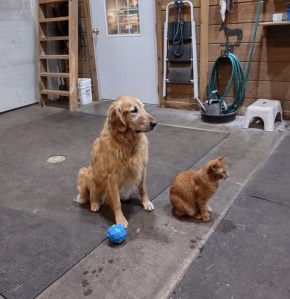
Rowdy has been strongly discouraged from making a mad dash into the pasture with a squeaker ball when the horses are galloping to the back of the paddock.
Mace and Fennel, not exempt from expected barn behaviors, are tasked with getting rid of rodents, and showing up at feeding time for a cursory checkup.
My own Code of Conduct includes measures to make sure these fabulous creatures entrusted to me have safe shelter, healthy food, quality vet care, individual attention, ample opportunity to exercise their bodies and their minds, plenty of treats, and to keep the cats’ water bowl clear of Rowdy slobber.
These are my expectations, not theirs. As head of my herd, I acknowledge the 4-leggeds as beings with brains and some degree of freedom to choose their actions, so I set these standards, present them clearly, offer gentle feedback and consistent reinforcement. In the event of the inevitable infringement, I engage in a bit of evaluation and reflection.
When my toes get stepped on, my space is invaded or my path is blocked by a big equine body, it’s likely not a personal slight. I need to consider the possibility that my request for a little room had not been received. Was he ready to listen? Did I have his attention? Was I clear in my communication? Was I mumbling, as George will tell you I’m often wont to do? Was I distracted by some random thought, a song on the radio, or a rowdy golden retriever?
When I come off the saddle and end up on the ground, was I paying attention to potential perils in the environment? Did I give cues to calm my anxious partner? Was I balanced myself, in a position to stay stable?
Roll CallBarn BuddiesWorkin’ Cat
If Rowdy races after the horses, squeaker ball in full squeal, is it possibly a lack of planning on my part (there’s a reason for that leash hanging in the barn aisle) given his natural tendency to chase moving objects?
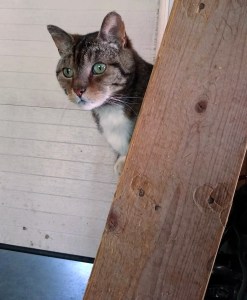
When Fennel doesn’t show up for a day (Mace has perfect attendance) maybe he’s out patrolling the perimeter, or otherwise engaged in the business of being a barn cat. Maybe he’s up in the hayloft sleeping off a chipmunk coma, or maybe he just doesn’t want to make an appearance. Some things just can’t be legislated, especially for cats.
We’re a low-key, laid-back sort of operation here at Four Sticks, a barn of rule followers and keepers of the peace. After years of education and experience we’ve evolved into a herd where everybody fits comfortably in their place, contributes to the common cause, cuts others some slack.







 From Four Sticks Farm